Thymus Vulgaris ~ Thyme

Thyme ~ Thymus Vulgaris
Common Species: Common Thyme, creeping thyme, Caraway thyme, lemon thyme, Thymus pulegioides, German Thyme, Mother of Thyme
FAMILY: Lamiaceae
GENUS: Thymus
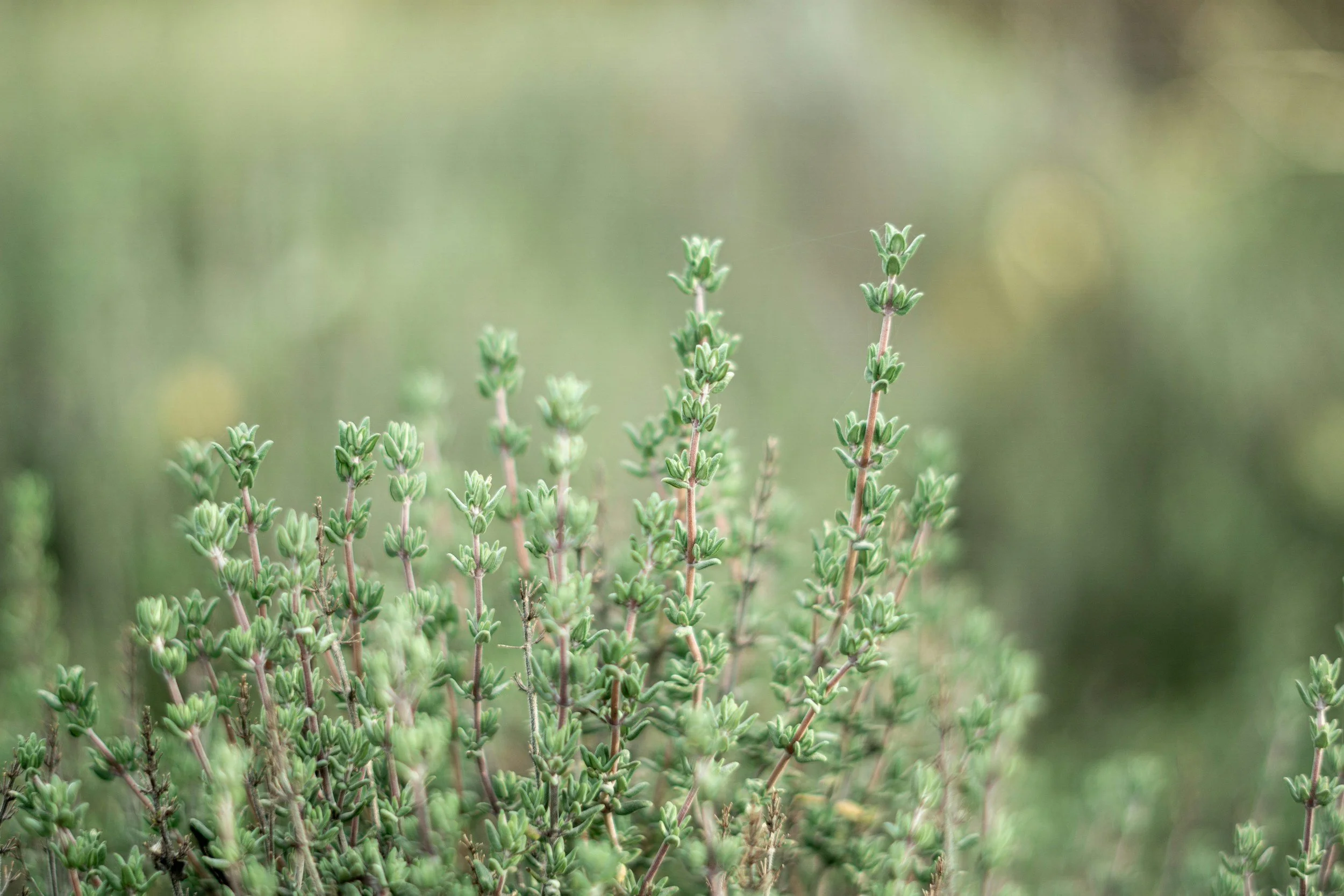
An Herb for winter winds
Thyme has long carried the reputation of being a protector, especially for the lungs and the spaces we inhabit. History runs through temple smoke, battlefields, and the sickrooms of plague-stricken Europe. The same qualities that made it valuable for embalming and ritual also gave it a place in protective remedies. It was burned, steeped, and mixed into vinegar’s to ‘clear’ the air.
Today we often think of thyme as a kitchen herb, but it’s story reminds us that it has been tied to many uses. Both aromatic and cleansing; thyme has remained a companion through the seasons by offering warmth and strength when our body feels most vulnerable.
HISTORY & tradition
Thyme, like cherries, carries a long history woven with symbolism and practical use. The roots reach back to ancient Egypt, where it was part of embalming practices and chosen for it’s strong preserving and cleansing qualities (1). In Greece, thyme was burned as incense in temples and added to baths as it was thought to bring courage and vitality (2). Roman soldiers adopted similar traditions, using thyme to purify their rooms and to flavor cheeses and liquors. Pliny the Elder described thyme in his Natural History, noting the fragrance and medicinal qualities (2).
By the Middle Ages, thyme was seen as both medicine and protection. Women embroidered sprigs of thyme onto scarves as a token of courage for knights heading to battle (1,2). It also became a common herb in kitchens and apothecaries, brewed into teas or syrups for coughs, and burned to clear the air. During the plague years, thyme was blended into remedies such as Four Thieves Vinegar, a preparation believed to protect against infection (3). Monks tended thyme in monastery gardens, where it was cultivated for culinary and medicinal use alongside other staples of European herb lore (4).
As thyme spread through Europe, it became a symbol of courage, purification, and healing. Folklore held that sleeping near thyme could encourage dreams of fairies, while practical use in food preservation and medicine kept it a household necessity (2,5). Colonists later carried it to North America, where it naturalized and continued to be valued in both kitchen and garden (6,7).
The story of thyme shows how deeply plants can shape our culture. From pharaohs and Roman soldiers to medieval monks and early American settlers, thyme has remained more than just a seasoning. You can read more about the history and traditions of thyme by purchasing the monograph [here].
The breath of flavor
Thymus vulgaris, or common thyme, is one of the most widely recognized culinary and medicinal herbs, treasured for both the woody aroma and ability to support health. Known for it’s small evergreen leaves and pungent flavor, thyme has been used for centuries to strengthen the lungs and purify spaces. It brings a unique flavor to food with it’s warming yet stimulating character.
The plant is rich in volatile oils, particularly thymol and carvacrol, which give thyme it’s sharp fragrance and strong antimicrobial properties. Alongside these oils, it carries flavonoids, tannins, and other antioxidants that help calm inflammation and protect tissues from oxidative stress. Traditionally, thyme has been brewed as tea or syrup to ease coughs, soothe sore throats, and encourage expectoration, making it a trusted ally during the colder months.
Beyond respiratory support, thyme has been valued for aiding digestion and reducing microbial load in food and the body. That sharp and warming nature brings circulation to the surface therefore helping to dispel congestion and invigorate the system. These qualities give thyme a dual action: cleansing and protective while also restoring vitality and strength when the body feels depleted.
According to herbal tradition, Thymus vulgaris is warming and drying, making it especially useful for damp and/or sluggish conditions of the lungs and digestion (5,6). Its influence encourages resilience, clarity, and a sense of renewal, whether used in the kitchen, the sickroom, or as part of daily wellness practices.
In essence, thyme is both a protector and a revitalizer. It clears stagnation without harshness and warms the body without over stimulation, making it a reliable companion in seasons of cold, illness, and recovery.
Cooking & culinary Tips
The essential oils in thyme (especially thymol and carvacrol) give the herb a signature aroma along with many antimicrobial and antioxidant benefits. These oils are quite resilient, but prolonged cooking at high heat can diminish their intensity and alter the balance of flavor. The key is to cook with thyme in ways that preserve its aromatic character while allowing it to blend seamlessly into savory and sweet dishes.
To retain thyme’s full flavor, add whole sprigs early in soups or stews so the oils can slowly infuse into the broth. For a brighter note I suggest adding fresh leaves toward the end of cooking to capture a sharper more uplifting note. A gentle way to draw out thyme’s essence without harsh heat is through herbal vinegar’s, infused honeys, or simple syrups which all capture antimicrobial benefits along with thyme’s earthy taste.
Thyme is highly versatile in the kitchen. It pairs beautifully with roasted root vegetables, chicken, lamb, and fish. It can be blended into marinades, rubs, and stuffing blends for a Thanksgiving turkey perhaps. For a more refreshing twist you can add a sprig of fresh thyme to lemonade, cocktails, or sparkling water. It can also balance some sweet and savory recipes. I can work nicely in baked goods and cookies.
For everyday cooking maybe try sprinkling fresh thyme leaves into grain bowls, soups, or egg dishes. You can easily whisk them into salad dressings with olive oil and lemon juice for a simple yet very aromatic vinaigrette. Thyme also shines in comfort foods like your creamy mashed potatoes. Fold your herb into the butter for a compound spread, or scatter over roasted squash and carrots for added yummy factor.
For a special preparation you could try pairing with (or in) warm bread for an elegant appetizer that highlights the earthy notes. Another favorite is thyme-lemon roasted chicken, where sprigs tucked beneath the skin infuse the meat with both flavor and aroma. However it’s used, thyme bridges the kitchen and the apothecary by offering both nourishment through its enduring taste and qualities.

Bridging Kitchen & Apothecary
Thyme bridges the world of food and medicine with ease. In the apothecary it has long been prepared as teas, syrups, and steams for respiratory troubles. The essential oils offer antimicrobial and expectorant qualities that support clear breathing and resilience.
In the kitchen, those same properties come through in flavor and preservation. A sprig of thyme simmered in broth or roasted alongside vegetables not only deepens taste but also carries a protective nature into daily meals. This overlap between nourishment and healing has kept thyme close at hand for centuries.
As both remedy and seasoning, thyme can remind us that care for the body often begins at the table. It is an herb that clears with offering warmth and comfort. It can bring protection whether steeped in a teacup or tucked into a roasting pan.
>”Practitioner” notes<
Thyme is a strong yet balanced ally, well known among herbalists for its affinity with the respiratory and digestive systems. The essential oils (particularly thymol and carvacrol) give it powerful antimicrobial, antispasmodic, and expectorant properties (1,2). These actions make thyme a valued support for lingering coughs, bronchitis, and seasonal respiratory challenges (3).
From a Western energetic perspective, thyme is warming, drying, and gently stimulating. It helps move stuck congestion, clears dampness, and restores vitality when the body feels heavy or sluggish (4). Practitioners take care when working with very hot and/or dry constitutions where thyme’s stimulating quality may be too much if overused (5).
Contemporary herbal practice and research highlight thyme’s antimicrobial effects against bacteria, fungi, and viruses (6). Laboratory studies confirm its broad antimicrobial activity, while small clinical trials suggest thyme extract can ease cough frequency and improve bronchitis symptoms (7). Its carminative and digestive actions are also valued for easing gas, sluggish digestion, and low appetite (8).
Herbalists today appreciate thyme’s versatility in both acute and chronic care. It can help calm spasmodic coughs, shorten the course of respiratory infections, and act as a preventive tonic during colder months (9). Topically, infused oils and washes are used for minor wounds and skin infections, reflecting its long history as both kitchen spice and protective remedy (10).
In practice, thyme stands out not only for its strength but for its reliability. Whether clearing the chest, easing the gut, or supporting overall resilience, it remains a practical and trusted herb in modern herbalism (11).
PRACTICAL TIPS
Keep a small jar of thyme honey or syrup on hand for seasonal coughs or scratchy throats. The warming and soothing qualities can bring quick comfort.
Use thyme-infused oil as a topical rub for tired muscles or minor skin irritations. Its antimicrobial and warming properties support both skin health and relaxation.
Sip a cup of thyme tea after meals to ease digestion and reduce gas or bloating. It pairs well with herbs like mint, fennel, or chamomile for added carminative effects.
Add a few sprigs of fresh thyme to steam inhalations during colds or congestion. The aromatic oils help open the chest and clear the breath.
Try incorporating thyme into savory broths or soups during the colder months to support resilience and keep the respiratory system strong.
Dosage & safety
Fresh herb: 1–3 sprigs daily in food or infused into broths. Can be added toward the end of cooking for best flavor and aroma.
Dried herb: 1–2 tsp per cup hot water, steeped 10–15 minutes. Take up to 3 times daily as a tea for digestion or respiratory support.
Tincture: 1–2 mL (20–40 drops) up to 3 times daily. Often combined with other expectorant or antimicrobial herbs.
Syrup: 1–2 tsp as needed for coughs or throat irritation. Can be taken alone or added to warm water or tea.
Essential oil (diluted): 1–2 drops in 1 Tbsp carrier oil for topical use. Avoid internal use of the essential oil except under professional guidance.
>These forms are most often used to ease coughs, support digestion, and strengthen resistance during seasonal challenges. Consistent, moderate use in teas or food provides steady benefit without overburdening the system.
Pregnancy and breastfeeding: Thyme is generally recognized as safe as a culinary herb. Concentrated forms such as tinctures or essential oil should be used cautiously, as data on high-dose safety is limited.
Children: Small amounts in food or tea are considered safe. Essential oil should not be used internally and must be diluted well if applied topically.
Drug interactions: May interact with thyroid medications, anticoagulants, or antiplatelet drugs due to its volatile oils and coumarin content. Consult a practitioner if taking long-term prescriptions.
Side effects: Excessive use may cause digestive upset or irritation of mucous membranes. Essential oil can be a strong skin irritant if undiluted.
Harvest and storage: Harvest aerial parts just before flowering for best potency. Dry in a dark, airy place and store in airtight containers away from heat and light. Fresh sprigs can be refrigerated for up to a week or frozen for longer keeping.
Conclusion
Thyme is a steadfast ally, rooted in strength, clarity, and protection. It has long been called upon in times of illness or transition, not for its gentleness alone but for its ability to steady the breath and fortify the body. From ancient households to modern kitchens, thyme has stood as a companion that clears, restores, and uplifts.
Working with thyme means drawing on its warmth in moments of weakness, congestion, or fatigue. Its medicine is both grounding and invigorating—like a breath of mountain air that steadies the spirit while strengthening the body.
Whether steeped in a simple tea, simmered in broth, or infused into honey, thyme reminds us that resilience often comes through everyday care and small, steady acts of renewal.
For a deeper dive into Thymus vulgaris: [Purchase Monograph]
References
Tasting Table. (2021, February 18). Thyme was once used to fend off the Black Death. Retrieved September 9, 2025, from https://www.tastingtable.com/1184907/thyme-was-once-used-to-fend-off-the-black-death
Soapyard. (n.d.). A brief history of thyme. Retrieved September 9, 2025, from https://soapyard.com/blogs/plants-with-a-purpose/a-brief-history-of-thyme?srsltid=AfmBOoq6QaLp-oMFS8S21BUGfksIkLbq8htmY9dcw9D0-soWVz7H9iWO
The Herbal Academy. (2021, October). DIY Four Thieves Vinegar. Retrieved September 9, 2025, from https://theherbalacademy.com/blog/diy-four-thieves%e2%93%a1-vinegar/
Urban Tilth. (n.d.). Herb profile: Thyme. Retrieved September 9, 2025, from https://urbantilth.org/herb/herb-thyme/
McCormick Science Institute. (n.d.). Culinary spices: Thyme. Retrieved September 9, 2025, from https://www.mccormickscienceinstitute.com/resources/culinary-spices/herbs-spices/thyme
North Carolina State University, Plants. (n.d.). Thymus vulgaris. Retrieved September 9, 2025, from https://plants.ces.ncsu.edu/plants/thymus-vulgaris/
Spadefoot Nursery. (n.d.). Thyme: Perennial crops. Retrieved September 9, 2025, from https://www.spadefootnursery.com/perennial-crops/thyme
National Institutes of Health (NIH). (n.d.). Thyme. Retrieved September 9, 2025, from https://www.ncbi.nlm.nih.gov/books/NBK92756/