

The Blush Between | Rose Cleansing Grains
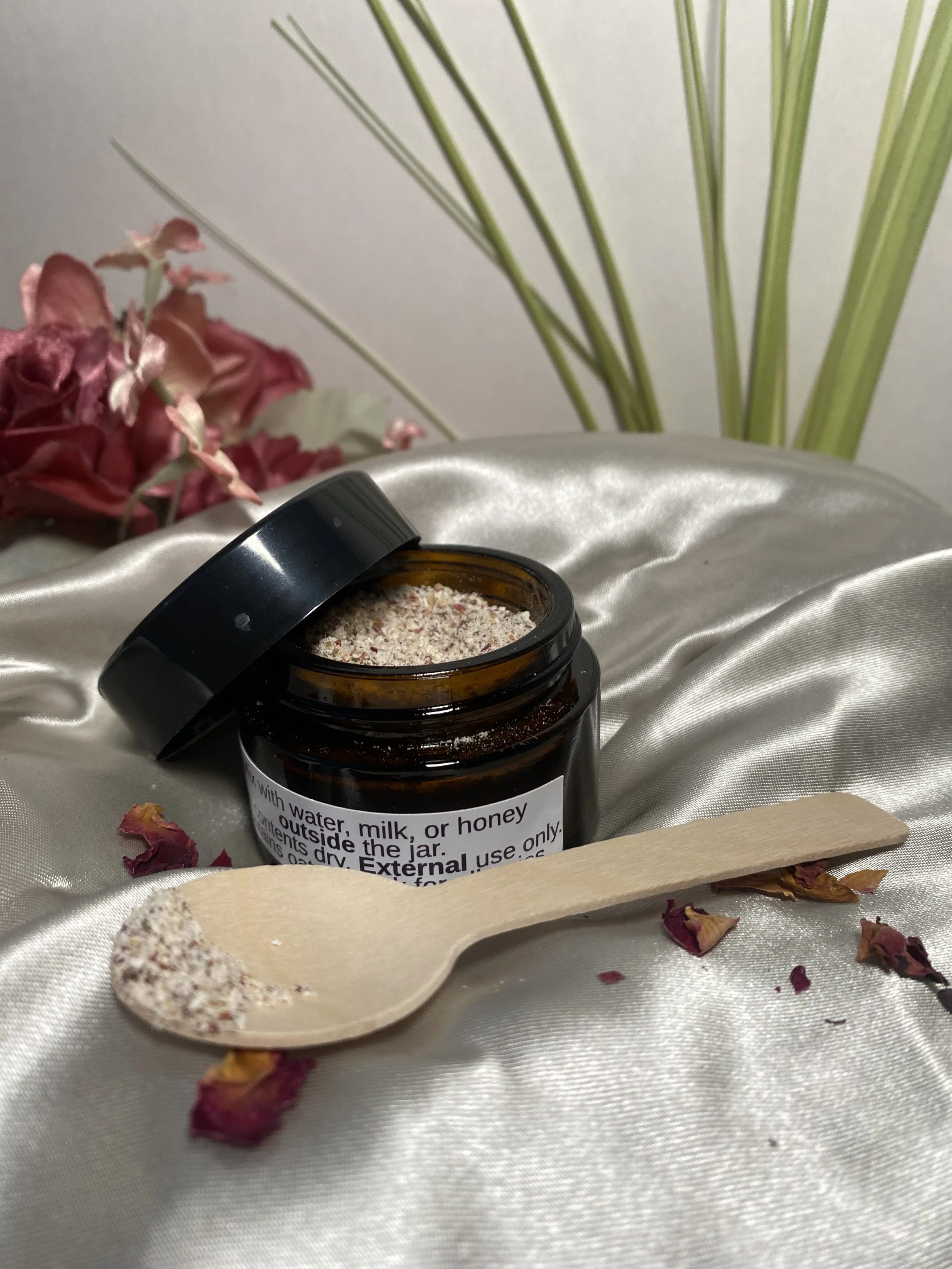
Cleansing grains are gentle exfoliants made from ground herbs, flowers, and seeds. They support the skin by removing dead cells, improving circulation, and bringing nutrients directly to the surface. Learning to make and use them at home is both practical and empowering, giving you a natural way to care for your skin. This post offers a simple, science-based overview of cleansing grains, their benefits, and a foundational method to create your own blend. Keep it simple, or explore bonus tips and variations for a more personalized experience.
For educational use and learning. These formulations are shared for personal. Please do not reproduce or sell commercially.
What is a Scrub Exactly?
Cleansing grains are finely ground plant powders used to gently buff away dead skin cells while supporting the skin’s natural renewal and texture. The idea of using natural powders and plant materials to care for the skin is not new. Across many ancient cultures people used ground grains, seeds, herbs, minerals, or clays to cleanse and exfoliate skin in ways that were both functional and ceremonial. In India, Ayurvedic udvartana and herbal pastes made of gram flour, turmeric, and sandalwood were used traditionally for cleansing and body polishing. East Asian cultures used rice powder or rice bran as gentle exfoliants to smooth and brighten the complexion. Egyptians and Greeks employed natural abrasives such as sea salt, milk, and olive oil blends to cleanse and soften the skin. These practices reflect a long human history of using natural materials for skin care and renewal.
In the modern era, cleansing grains adapt these traditions into simple, plant‑based exfoliants that are easy to use at home. When mixed with water or a liquid like honey, yogurt, or milk, they create a paste that gently removes dead surface cells, improves circulation, and can help unclog pores while also delivering antioxidant and soothing plant compounds to the skin. Herbal powders may include oats for their emollient and anti‑inflammatory qualities, hibiscus for its natural acids that support gentle renewal, rose petals for their calming effect, or raspberry leaf for its mild astringency. All of this aligns with modern dermatological understanding that physical exfoliation helps reveal fresher skin and improves texture when done gently and with appropriate particle size.
Cleansing grains bridge ancient wisdom and current scientific skincare by combining physical exfoliation with botanical support. They are flexible and adaptable, allowing you to tailor blends to your skin type and sensory preference while honoring the long history of natural beauty care.
** All recipes and ideas shared here are for educational and informational purposes. Every body is different, use what feels right for you and seek professional guidance when needed.
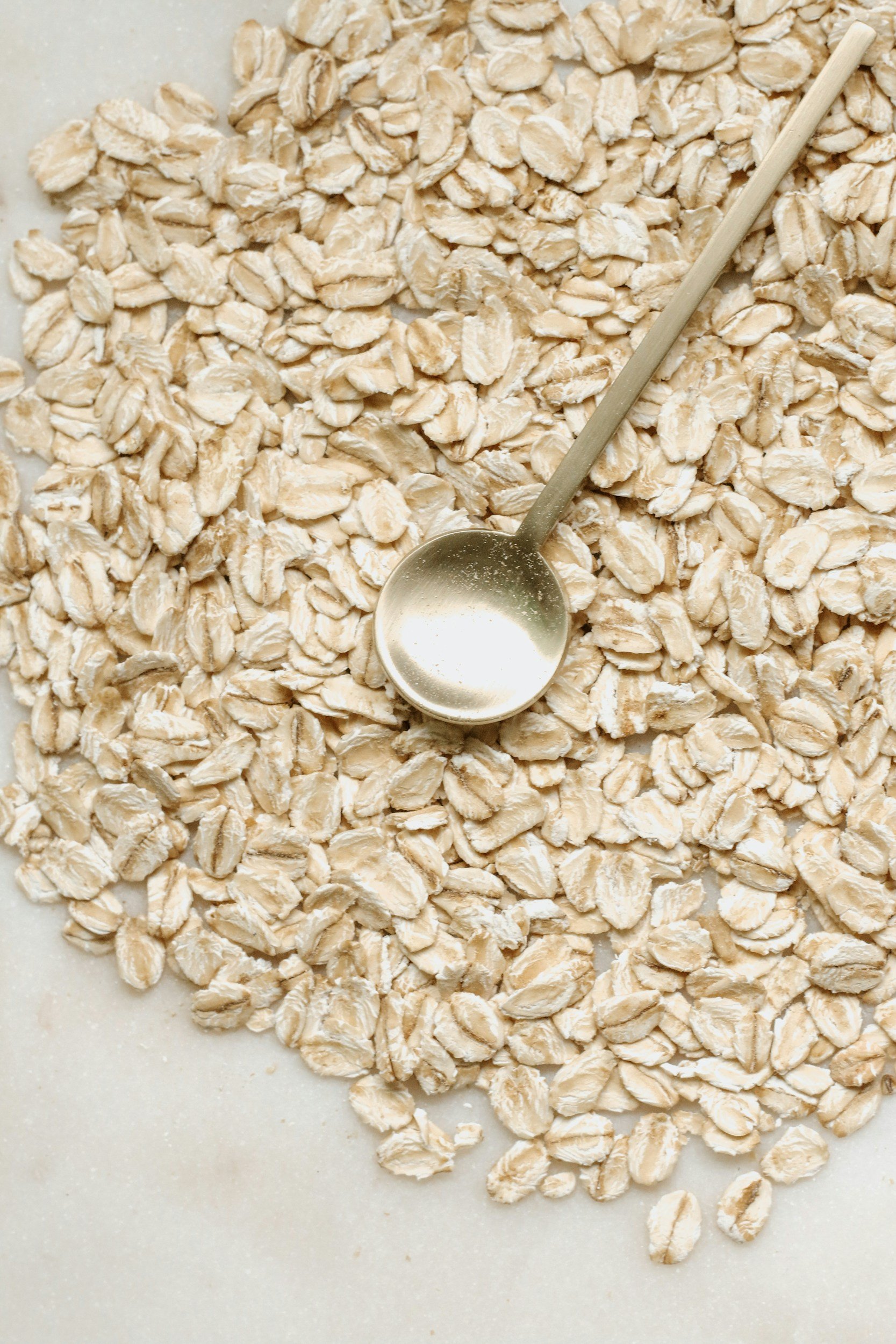
Lets Talk Ingredients
<Amounts are listed below in printable>
Oats -> Gentle and nourishing, rich in beta-glucans and fatty acids. Soothes, hydrates, and provides soft exfoliation.
Milk Powder -> Contains lactic acid to gently renew skin cells. Adds creaminess and helps the grains glide smoothly.
Rose Petals -> Calming and floral, with antioxidants and tannins. Soothes irritation yet encourages circulation, and adds a delicate scent.
Nutmeg -> Ground fresh to preserve the essential oils and aroma. Warming, slightly stimulating, and rich in antioxidants.
This blend is gentle and multi-purpose. Oats exfoliate and hydrate, milk softens, rose petals soothe, and nutmeg adds a warming, subtle spice for a sensory-rich skin ritual.

Welcome!
Hey, I’m Brit. I help you blend the comfort of the kitchen with the care of the apothecary.

How does it Work?
Cleansing grains work through a combination of physical exfoliation and botanical nourishment. When mixed with water, milk, or oil, the finely ground herbs and grains gently buff away dead skin cells, improving circulation and promoting the natural renewal of the skin’s surface.
At the same time, active compounds in the botanicals interact directly with the skin. Oats provide beta-glucans and fatty acids that soothe and strengthen the skin barrier. Milk powder delivers lactic acid, a mild exfoliant that encourages cell turnover. Rose petals bring antioxidants and tannins, which can calm irritation and support tissue tone. Nutmeg adds warmth and stimulation, with antioxidants that help protect the skin.
Together, these ingredients create a multi-layered effect. The physical action removes impurities, while the plant compounds nourish, calm, and refresh. Using the grains becomes both a practical skincare routine and a sensory ritual, connecting touch, scent, and intention in a gentle act of self-care.
Instructions
(1) AMOUNTS: First you want to figure out how much of each herb you will need. This time I am using parts, but it is the same principle as using percentages (example recipe). We will have 5 parts total, and I always recommend to start with a small amount before committing to a full batch/size. 1 oz is a good amount to test. For general reference, 1 oz is about 28 grams. Now, we can figure out our parts. I am using 2p oats, 1p milk powder, 0.5p rose petals, 0.5p nutmeg.
So we will say that 2p oats is 60% of our blend - we will need about 0.6oz (percentage x 1oz container size).
(2) MEASURE: Now that we know the amounts of each ingredient, we need to measure them out. I use a large bowl and tare with a kitchen scale. Measure each and set aside.
(3) BLEND/GRIND: Now you will need a method of blending or grinding (I use this blender & grinder). Blend up your oats and remeasure to double check the amounts. Since I spilled some rose, I added a bit to compensate. I always add 10-20% extra to allot for any product lost or spilled.
(4) COMBINE: Once you have all your ingredients prepared, you can combine them together. Combine oats, milk powder, rose, and ground nutmeg together and mix. I like to blend once more and strain through a mesh strainer to ensure extra fine grains. Each step can be adjusted to your preference. Pour it into your container of choice and enjoy!
I try to scrub at least 1x a week to help maintain texture and refresh my skin. Simply combine with water and use OR try washing with honey, yogurt, milk, etc. Cleansing grains can last for at least a year if kept completely dry. View the video to learn how to use your cleansing grains!
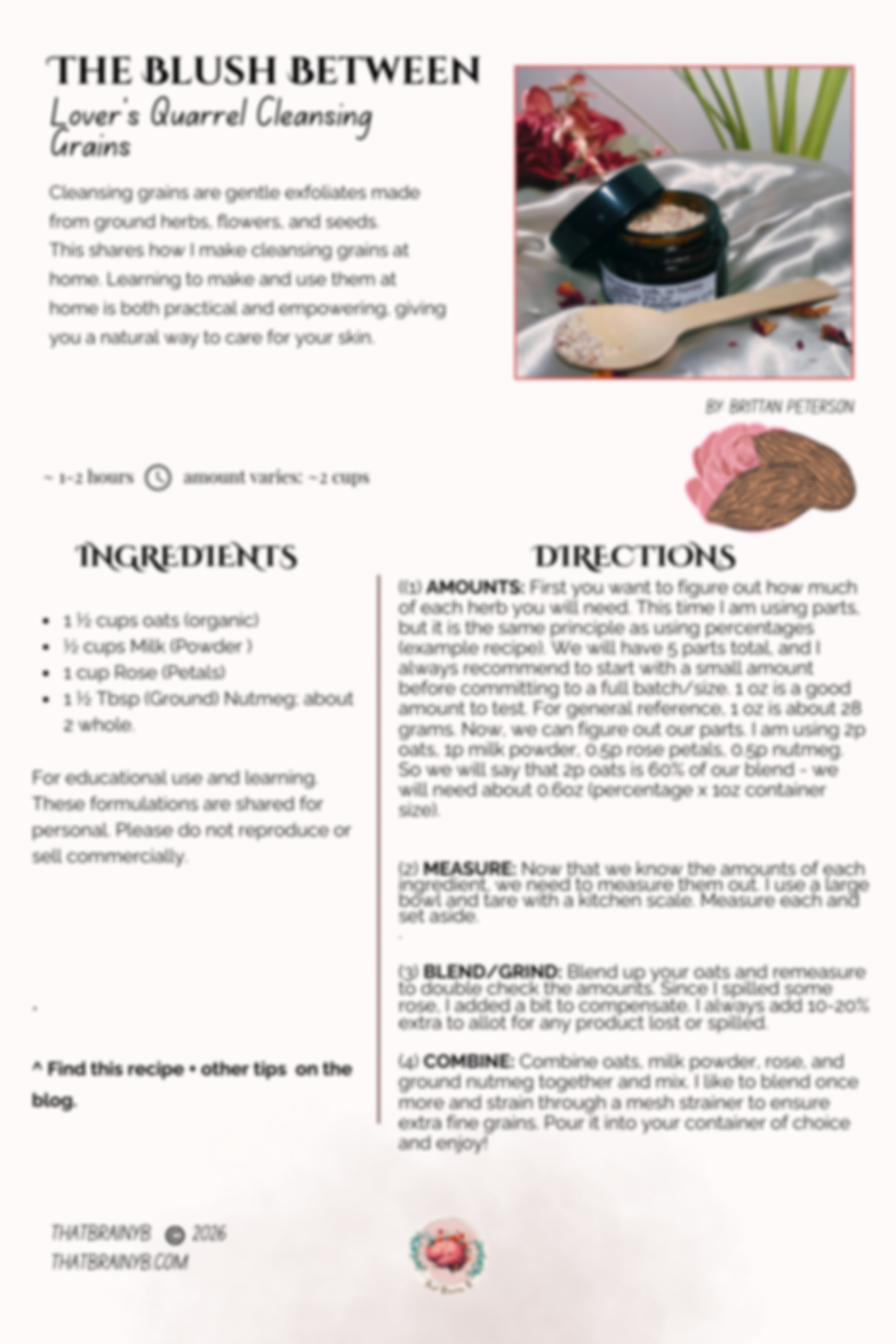
Other Recipes & Resources
Favorite links and Resources → [See my Links]
Oats Skin Benefits→ [Read More]
Learn about Milk Proteins in Dermatology → [Article]
**VOTE ON EVENTS FOR 2026** → Vote Now
Trusted Source for Herbs & Other→ [Purchase Here] & [Apotheosis] < My local supplier and partner.
Find your Flavor FREE Workbook → [Get Freebie]
Ayurvedic Perspectives → [Read More]
This post contains affiliate links. If you click through and make a purchase, I may earn a small commission at no extra cost to you. I only recommend products I truly support and use or just really enjoy. Thank you so much for supporting my small business!

Welcome to your blank materia medica pages, thoughtfully designed to guide your herbal learning journey. Across eight pages you will find creative and detailed prompts that encourage deep exploration on each plant’s unique properties, uses, and energetic qualities.
Study the applications and uses from various angles in time and space (aka your kitchen and apothecary). Note the organ affinity and aromas you personally notice.
Use these pages as your personal resource to cultivate a rich understanding and connection with the plants you work with. Download and reuse forever!