

More Than a Sweetener | Honey in Herbalism and Traditional Medicine
Why has honey followed humans through so many different traditions of medicine?
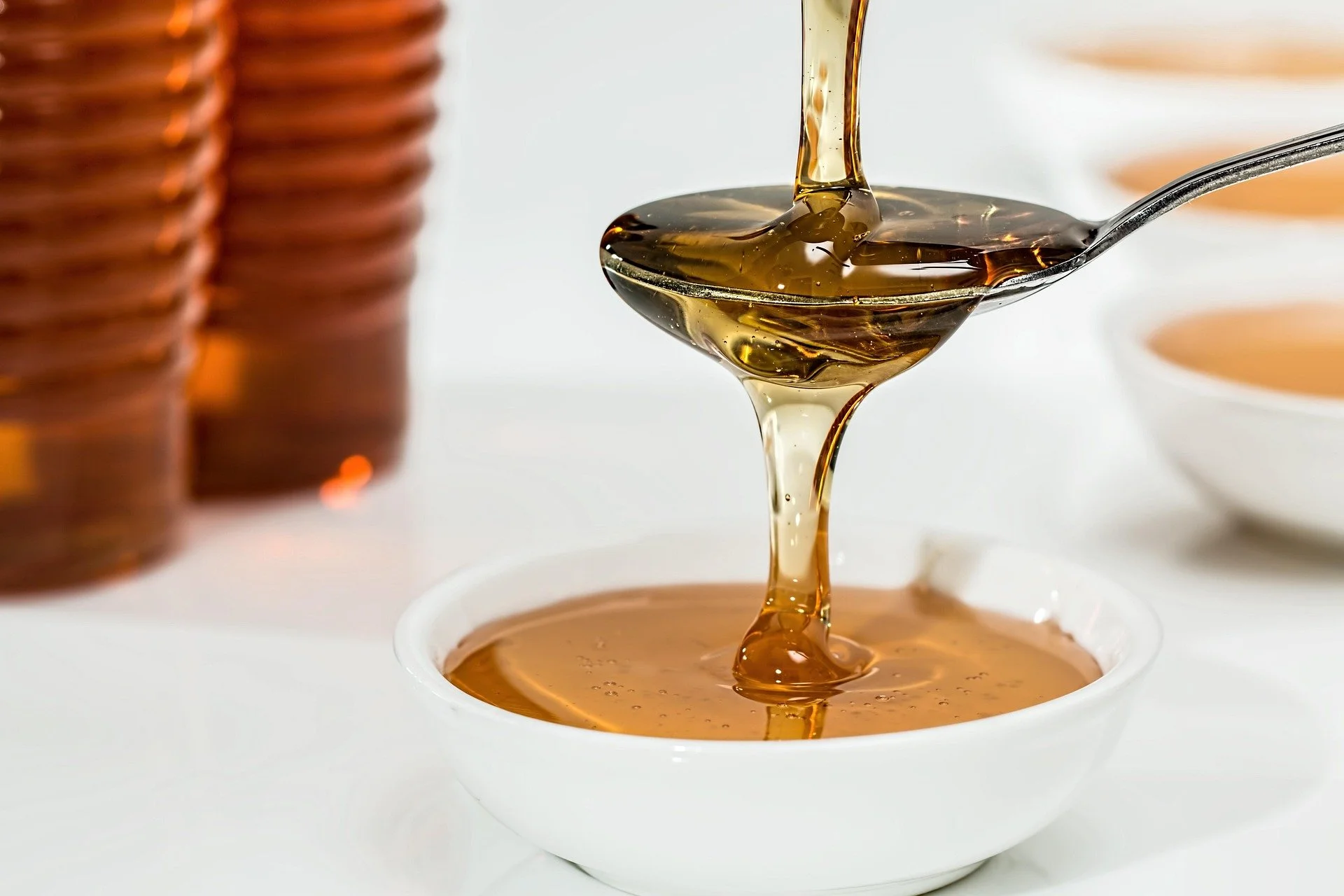
Beautiful golden honey, a delicacy rich in sweetness and bee enzymes. Honey not only tastes wonderful and is sweeter than white table sugar, it also has many other benefits! Honey has been used to support humans in various ways for thousands of years. Keep reading to learn all the details on why an herbalist (me…this herbalist as in me) LOVES honey for many different reasons.
~ For educational purposes and learning. These tips and blends are shared for personal. Do not reproduce or sell commercially. ~What is honey?
Before I met my honey supplier and started really working with honey, I never really put much thought into what it was. I only knew how hard bees worked, and that they liked the pollen from a plant. That isn’t the full story though, it’s actually quite a vague version…
We know that bees have a pretty close relationship with the plants. Plants provide nutrients for the bees to help them survive. Bees perform pollination which allows the participating flowering plants to reproduce and create seeds and fruits. So no wonder it’s such a close relationship! My honey supplier explained that honey is like squirrels stashing acorns or gardeners canning their produce. The honey is created for storing their food through the winter when flowers aren’t available.
Bees produce honey by mixing nectar they collected from secreting plants with bee enzymes. These enzymes are formed in their hypopharyngeal glands, and secreted from their salivary glands. So essentially - a bee smells the sweet flower fragrance and seeks out that golden snack. The forager bee collects its snack and then heads back home while it holds the honey in a special ‘honey stomach’ organ. Once home, the forager looks for a house bee to regurgitate the nectar to. Then that bee will find another bee to smooch with and share nectar with, French style. This act is called trophallaxis and each bee will contribute specialized enzymes that break down complex sugars and reduce moisture. These enzymes also produce gluconic acid and natural hydrogen peroxide which protect the hive from harmful microbes. Once this mixture thickens into raw honey, the bees deposit it into honeycomb cells, and then fan it with their wings to evaporate remaining water. They also cap the honeycomb cells with wax to prevent moisture being absorbed from the air.
Note that modern reviews generally put honey near 80 to 85% sugars with roughly 15 to 17% water, however composition varies depending on floral source and other factors (14). This is helpful to note when trying to switch white table sugar for honey. Sugar is dry, so the liquid will change your recipes. Honey is also acidic and may cause baked goods to brown faster, in which case you could try adding baking soda to balance it out!
Honey is not like our ordinary white table double sugar molecule called sucrose, because the bees already broke the sucrose apart into single glucose and fructose. Your small intestine doesn’t have to work as hard to break those sugars down because the bees have already started that process for you!
Important herbalist question:
Is all honey the same?
NO
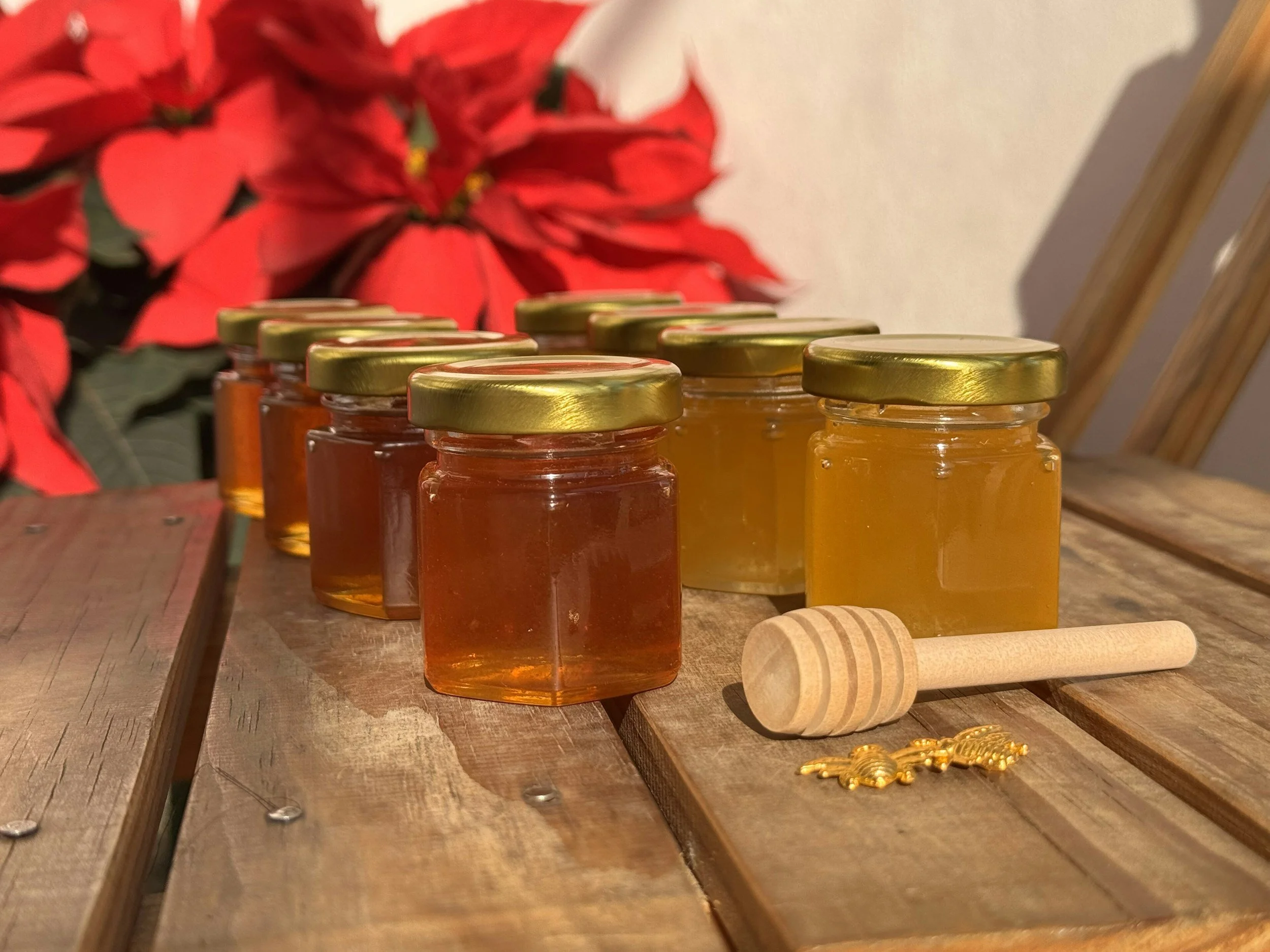
Honey can vary by color, flavor, geographic location, processing, etc. There are different forms of crystallization, and yummy whipped varieties. The floral sources will change the ratio of glucose and fructose, higher glucose means it will crystallize faster.
Monofloral honey has one dominant plant species. Examples include Manuka, Tupelo, Acacia, and my personal favorite, Buckwheat! Another variety I learned about from my supplier is called Lanternfly Honey,
Multifloral or polyfloral honey comes from multiple plant sources, like my local wildflower honey.
My honey supplier introduced me to honeydew honey, which actually comes from the excretions of a spotted lantern-fly later in the season. Typically in the garden, spotted lantern-flies are not welcome visitors. For bees though, they want the honeydew it excretes when nectar is more scarce.
Honey as an herbal preparation
Honey has been used as a sweetener and preservative in composite drugs before refined sugar became widely available. Potions or pastilles, there is a lot of history with honey and medicine. Pastilles or lozenges are one way to incorporate powdered herbs into a preparation rather than using only an extracted or infused component. Another preparation very similar is called an electuary. My strawberry hibiscus honey is in this category because I created it by blending powdered herbs with my local honey to eat much like a delicious jam. Instead of mixing to form a disk and coat with more powder, I mixed everything together to create a thick paste. Another method of mixing herbs and honey is with a simple infusion using time and low heat, or no heat and natural sunlight.
You may have also heard of the term oxymel before, which is the combination of honey and vinegar. This combination also has a long history in traditional medicine. It is one of the only home remedies my family taught me and I cherish that. At any sign of sickness, my mom would make a nice warm cup of water with vinegar and honey. Fire cider would be considered an oxymel. [Fire Cider Recipe]
Then you have mead, which is made by fermenting honey, water, and yeast. Just to name a few different preparations for honey, and why it is so loved.
Honey across Time & Traditions
Honey has held a place in many folk remedies across time and traditions! We will get into the science and chemistry soon, but there have long been associations between honey and energy, but also honey and sleep? Skim a few old remedy books and you’ll find honey in preparations to relieve constipation or diarrhea. This can sound contradicting, but there are many good theories out there with an unfortunate lack in research. You will likely come across an oxymel or two in these remedy books. Oxymels have been used for thousands of years, both preserving and extracting. Look into “haymakers punch,” and “Honeygar”Honey has also long been associated with hay fever relief, but achieving this with honey alone can be challenging.
Please note that honey is not a replacement for foundational habits like a balanced diet, regular movement, stress management, and adequate sleep.
In Ayurvedic traditions honey is popular in various preparations and is considered sacred medicine that can balance the Kapha Dosha. Here we might find it specified as Purana Madhu or honey that has been aged for over a year. Within some of these traditions, heated honey is not recommended. These traditional ideas do not have strong modern scientific support, although heat does affect some components of honey. There are also certain foods you are not meant to mix with honey like sesame oil due to it being considered toxic. I have much respect for Ayurvedic traditions, but often practice more from a western lens personally.
A very interesting story involving honey, also contained poison! King Mithridates VI Eupator crafted an antidote called The Theriac Mithridatium which contained honey. His father died suspiciously, and he feared for his own life which inspired this antidote. he took tiny non-lethal doses of poisons in an attempt to build tolerance to them. When Pompey finally defeated him, he wished to commit suicide with poison but was unable to with his now “buffed up” immune system. Galen Paleargomum also experimented with this formula and called it theriac.

Welcome!
Hey, I’m Brit. I help you blend the comfort of the kitchen with the care of the apothecary.
Currently Loving
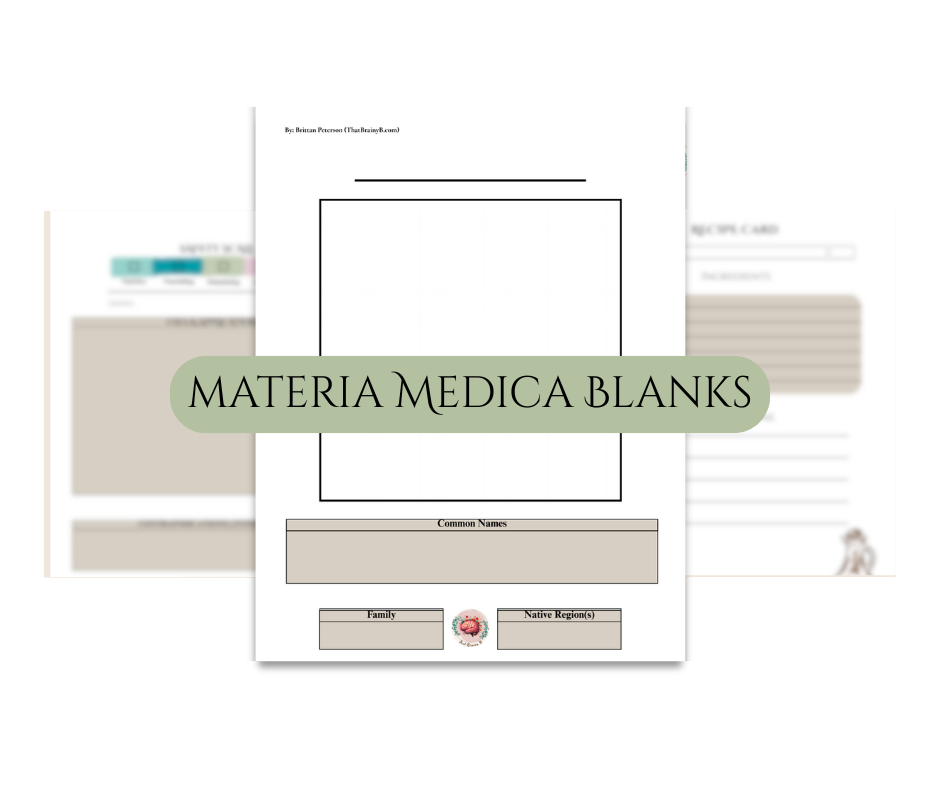
Welcome to your blank materia medica pages, thoughtfully designed to guide your herbal learning journey. Across eight pages you will find creative and detailed prompts that encourage deep exploration on each plant’s unique properties, uses, and energetic qualities.
Study the applications and uses from various angles in time and space (aka your kitchen and apothecary). Note the organ affinity and aromas you personally notice.
Use these pages as your personal resource to cultivate a rich understanding and connection with the plants you work with. Download and reuse forever!
What herbalists actually do with honey
In his book Stalking the Wild Asparagus, Euell Gibbons references honey in various recipes like jelly, mead, and honey vinegar. He also shares stories of watching his grandpa harvesting wild bee trees. As I mentioned before, you can craft honey electuaries, pastilles, infusions, and more! Honey has several properties that can make it difficult for many microorganisms to grow, including its low water activity and acidic environment. Honey can contain spores of Clostridium botulinum. This is why honey is not recommended for children under 12 months. This is why you will see honey is not recommended for children under 1. You can really mix it up and try herbal powders, honey, and even nut butters to form something like a treat. Honey is great for mixing into candy, lozenges, chocolate, energy balls, and syrups just to name a few ideas.
Herbalists often LOVE honey because it is a wonderful partner due to all these benefits, and the palatability. Sam Coffman mentioned using honey as a quick glucose hit for energy, and in relieving mild wounds and burns. Honey is also a humectant, meaning it attracts and retains moisture.
So what does the research actually say?
Research on honey is interesting, but it is also a great example of why we have to be careful when we talk about “honey” as though it is one standardized substance. Honey varies considerably depending on floral source, geography, season, and various other factors. This can make it challenging to compare studies or apply findings from one type of honey to another.
There is some intriguing research surrounding honey and oral health. In vitro studies have found that certain honeys can inhibit the growth or adherence of oral bacteria. Manuka honey in particular has been studied for its effects on oral bacteria and dental biofilms. Small pilot studies have explored Manuka honey as an adjunct to conventional periodontal treatment, with some promising findings (8). However, these studies are small and do not mean that honey should be considered a treatment for periodontal disease.
Evidence is generally quite limited regarding the specifics of honey, but there are legitimate hypotheses that honey could influence both energy and sleep. In a systematic review of 9 human studies, acute honey use produced similar performance and perceptual responses compared with other carbohydrate sources. Longer-term supplementation showed some possible effects on immune responses, but further research is needed (9). In another study involving 12 trained male cyclists, honey produced similar carbohydrate oxidation, fat oxidation, GI symptoms, and time to fatigue (10). Overall the theory is that honey can provide carbohydrates for exercise and may support energy availability during prolonged activity. Honey is not shown to be consistently or significantly superior to other carbohydrate sources, but may be comparable? The mechanisms behind this are yet to be fully revealed, but there may be associations with replenishing or keeping glycogen adequate.
Moving into sleep, the research is even more limited. Direct support for honey and sleep is not well understood, but there is more research surrounding honey and nocturnal cough specifically (11). There are also some interesting theories surrounding carbohydrates, glycogen, blood glucose, tryptophan, and sleep. The brain is metabolically demanding and relies heavily on glucose for energy. During periods without food, the liver helps maintain blood glucose by releasing glucose from stored glycogen and through other metabolic processes (12). One proposed mechanism is that consuming carbohydrate increases insulin, which promotes the uptake of competing neutral amino acids into muscle. This can increase the relative availability of tryptophan for transport across the blood-brain barrier. Tryptophan can then contribute to serotonin production, and serotonin is involved in the pathway leading to melatonin.
This gives us an interesting nutritional theory for why a carbohydrate-containing food such as honey might be paired with a tryptophan-containing food such as milk. There is even a small clinical trial in hospitalized patients with acute coronary syndrome that found improved sleep scores after three days of consuming a milk-honey mixture compared with routine care (13). However, this was a small study in a specific hospitalized population and cannot tell us whether honey itself improves sleep in healthy people.
So you might try pairing honey with a tryptophan-containing food such as warm milk if you enjoy the combination, but I would consider this more of an interesting nutritional tradition and hypothesis than an established sleep intervention. More research is needed before we can say that honey reliably improves sleep or increases melatonin.
The metal question - Can you scoop honey with metal?
Honey is generally acidic with a low pH of about 3.4-6.0. Looking at the theory that acids can corrode metal or cause chemical reactions and leach into our honey isn’t totally wrong but let’s take a closer look. Many metals can react under certain conditions, but food-grade stainless steel is a practical and appropriate choice for contact with honey. I would be more cautious about deliberately storing honey in prolonged contact with reactive or unsuitable metals. The material, condition of the metal, acidity of the food, moisture, temperature, and length of contact can all affect whether corrosion or metal migration becomes a concern. So if your honey jar comes with a little metal spoon, you do not need to panic. Just use an appropriate food-safe utensil and avoid leaving questionable metals sitting in the honey for extended periods.
Can you heat honey? Yes but carefully.
There is not one universal temperature at which honey suddenly becomes “bad.” The effects of heat depend on both temperature and how long the honey is exposed to it. Research has demonstrated that heating can reduce enzyme activity, with greater effects as temperature increases. Heating can also affect compounds used as indicators of honey quality, such as hydroxymethylfurfural (HMF). For that reason, if your goal is to preserve as much of the naturally occurring enzyme activity and other heat-sensitive compounds as possible, gentler temperatures and shorter heating times make sense. These are things to clarify with your local honey supplier or beekeeper, everyone has their preference and process. My honey infusions are done in the sun, but I also have made infusions in my crock-pot using the lowest or warm setting.
And that brings us back to one of the biggest themes in honey research: honey is not one standardized substance. Floral source, processing, storage, temperature, and preparation all matter. The more we learn about honey, the more important that distinction becomes.
~ This article is for educational purposes only and isn’t medical advice. Nothing here is meant to diagnose, treat, cure, or prevent disease.Simple starter Recipes
1. Simple Herbal Honey
Craft a simple herbal honey. Gather fresh plant material and stuff your jar with about two times the amount of honey you have (1:2). Fill your jar with honey and let infuse for several weeks in the sun, turning every so many days. Try some of my favorites: Bee balm, Lemon Balm, Rose, Holy basil. Because fresh herbs introduce additional moisture, this type of infusion needs more care than an infusion made with fully dried herbs. Watch for fermentation, mold, or other signs of spoilage and discard anything that looks or smells off.
2. Herbal Lozenge
Try creating an herbal lozenge or pastille with powdered herbs and honey. This recipe from Mountain Rose Herbs also uses a tincture, so explore different methods and recipes. I am excited to experiment with this more and eventually share recipes.
3. Fire Cider
There are several recipes out there, check out these three different versions. Another option is to create or purchase a fire cider seasoning blend, and mix in the vinegar and honey for quick consumption or as a lovely salad dressing!
General Safety Notes
Honey is not appropriate for infants under 12 months.
Honey is still a concentrated source of sugar.
Not every traditional use has modern clinical evidence.
Honey varies significantly depending on floral source and processing.
Heat and storage can affect some components of honey.
Herbal preparations need to be considered individually rather than assuming honey makes everything safe or effective.
Honey is fascinating because it sits at the intersection of plants, insects, chemistry, food, medicine, culture and human tradition.
A flower produces nectar. A bee transforms it. Humans collect it.
Other Recipes & Mentioned Resources
* Check out My Local Honey Supplier *
Is honey really bee spit or vomit? → [View Here]
How bees make honey →[Learn More]
Honey vs Sugar → [Read more]
Horticultural Therapy →[Learn More]
Honey is Ayurveda → [Read More]
What is Mead → [View Here]
- Research
Honey and Human Health → [Read Article]
Manuka periodontal adjunct → [Read Article]
Honey and Exercise → [Read Article]
Honey and Cycling → [Read Article]
Honey and Nocturnal Cough → [Read Article]
Liver Glycogen Explanation → [Read More]
Specific study on coronary patients → [Read Article]
Composition of Honey → [Learn More]
Sugar in Potions → [Read Article]
Carbohydrates & Sleep → [Read Article]
Heating Honey → [Read More]
Make Fire Cider → [Learn More]
This post contains affiliate links. If you click through and make a purchase, I may earn a small commission at no extra cost to you. I only recommend products I truly support and use or just really enjoy. Thank you so much for supporting my small business!
<General Information, Educational Purposes>

Raise your hand if you’ve heard of fire cider? Honestly I was introduced to this concept briefly a few times over the years, but I hadn’t really explored it until my recent herbal studies! This is such a spicy and special recipe to the herbal community that I can’t wait to share how to make with you.