

Tea vs. Tisane | What’s the Difference Between True Tea and Herbal Infusions
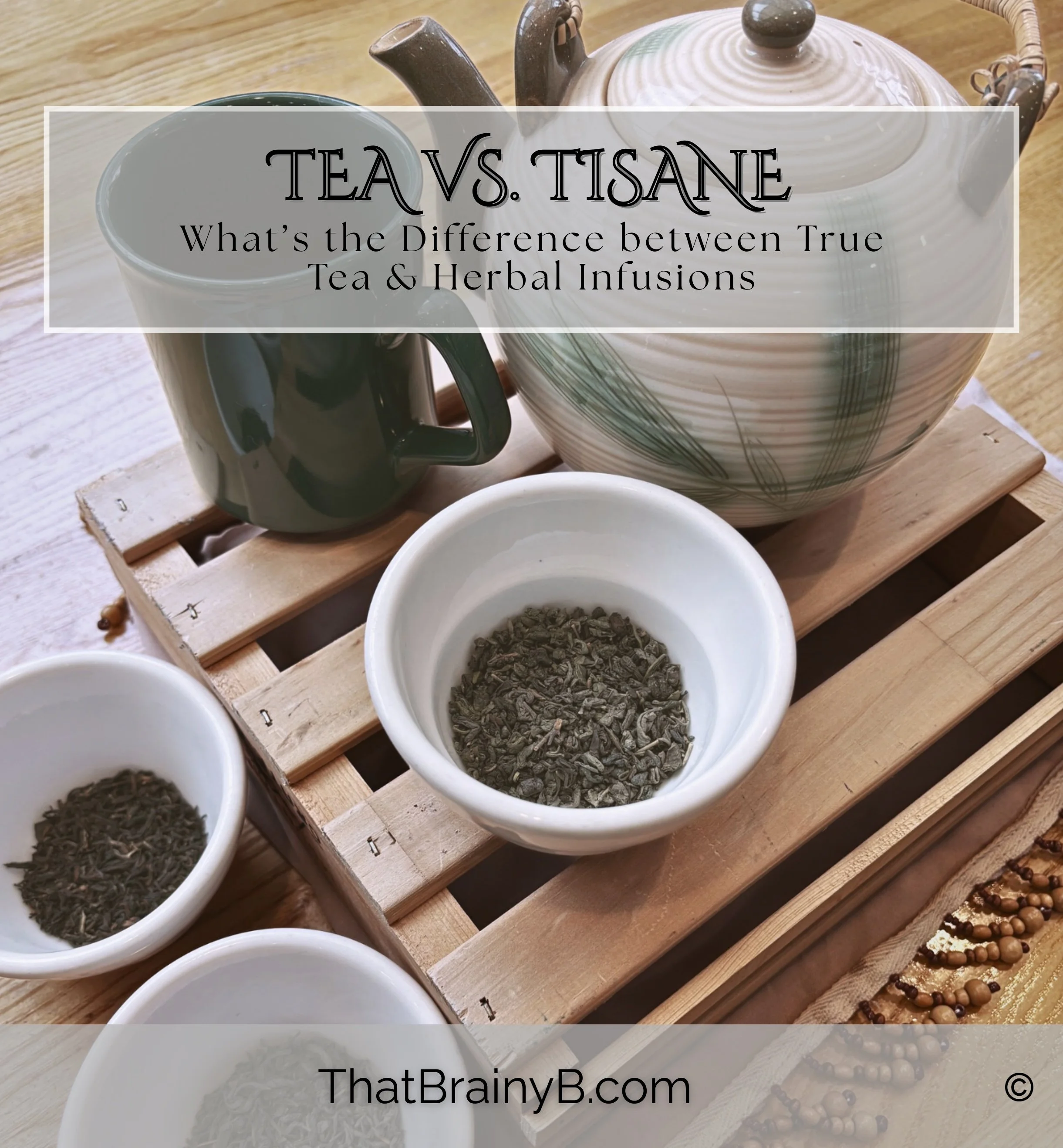
A warm and welcoming hug in a mug to start the morning, or cooling refreshment for those extra hot summer days. Tea or Tisane, the potential opportunities throughout are endless.
The concept of tea may seem relatively simple at first, but it turns out to be quite complex. Perhaps you have a basic understanding of tea and what it is, but have yet to learn the difference between a tisane. Even if you do know the difference, I invite you to learn more about the history and traditions behind our favorite comforting beverages. You might be surprised to learn how this popular tradition is thought to have started.
Keep reading to gain new insight into what this popular drink really is.
~ For educational purposes and learning. These tips and blends are shared for personal. Do not reproduce or sell commercially. ~What is tea?…really..
Let’s get this metaphorical elephant out of here and chat about these terms. Tea is among the more popular and you have likely had a few versions within arms reach throughout your lifetime. Tea is a fancy name for a relatively simple beverage that was actually considered an accident?
TEA- An aromatic beverage made from the leaves of the Camellia Sinensis plant. The name is related to the trade routes and originally was associated with many different names. Te, Cha, and Chai are a just a few.
Tea is often used as a broad term for many herbal infusions, but the term itself is argued to be an infusion only of Camellia Sinensis. The even more confusing part is the numerous other names for the different types of traditional tea. The slight alteration in methods of preparation used goes to show the true versatility in potential of our plants!
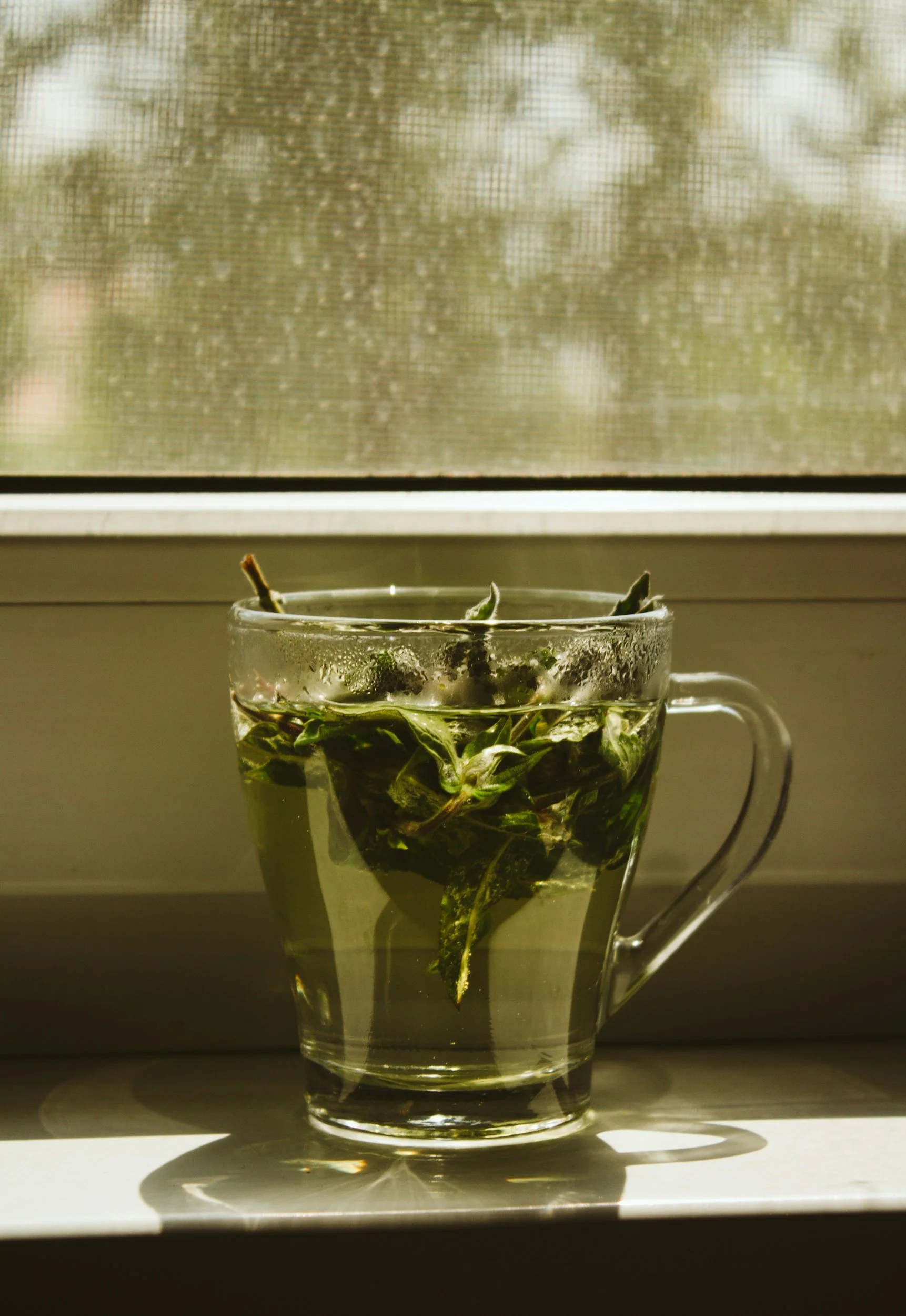
Lets Talk Green Tea
JAPANESE VARIETIES
<General Information, Educational Purposes
>
*Note that the location is mostly in reference to origin, but is subject to overlap*
MATCHA- As has a very particular growing process. Each plant is grown in the shade for several weeks before harvesting which increases chlorophyll production in order to generate the nutrients needed. Matcha is among the most nutrient of the green tea variations, packed full of antioxidants and amino acids. The precursor before being cut up and powdered can be referred to as tencha, which is rarely consumed as a loose leaf tea.
TENCHA vs GYOKURO-> Gyokuro is often referred to as “Japans most luxurious shaded green tea.” Harvested from the first 3 youngest sprouts and shade the longest to produce rich natural sweetness and deep umami flavors. Gyokuro is enjoyed as a loose leaf tea without the leaves being rolled. Stems are really only removed for tencha and may be repurposed into a “powder tea" blend called Konacha which combines leftover powders of gyokuro and sencha most often. This is an affordable tea that is offered at restaurants. Konacha is not to be confused with kukicha, which is made with only the stems and stalks. The deep familiar flavor is associated with rolling the leaves first, and then tightly curling them. With Tencha, the first 5 sprouts are used and dried flat before cutting up and providing an essential base to ceremonial matcha.
Tencha and Gyokuro are both shaded tea plants, and made with the youngest sprouts. Tencha is used for matcha and essentially translates to “tea for grinding,” or “Mortar Tea.”
GREEN - While all of the above mentioned also consist of green tea, there are a few more to discuss! We definitely will not get to discuss all, there are thousands of varieties and variations we could explore.
Sencha: Grassy and fresh due to the steaming process to prevent oxidation similar to matcha but unshaded.
Hojicha: Made by roasting sencha over charcoal, giving us a milder finish with less caffeine. It is said to be nice for nighttime or sensitive stomach’s.
Bancha: Brewed from older larger leaves.
Chinese VARIETIES
Gunpowder: Each leaf is hand rolled into tiny little pellets appearing like gunpowder. Stimulating and fresh offering smoky notes in the strong flavor. Combines well with spearmint to make another familiar favorite - Moroccan (Maghrebi) Mint Tea.
Longjing (Dragon Well): Famously pan-roasted to prevent oxidation. Needle-like leaves are brewed short to prevent bitterness. True Longjing tea is really only from the Longjing Village in Hangzhou.
Chun Mee: Hand rolled into a hook like eyebrow shape also pan-fired or baked. Offers a toast and sweet plum like flavor with hints or smokiness.
Huangshan Maofeng: Known for it’s light floral profile connected to the harvesting time of early spring. Originates from Huangshan mountain region using small leaf bush varieties.
Often times the differences will come down to origin, cultivation, growing, harvesting and preparation methods.
BLACK - Remember, we are still talking about ‘traditional’ tea which is ALL made from Camellia Sinensis.
Assam: Often using a variety Camellia Sinensis var. Assamica which is native to clay rich tropical regions like Assam India. Offers a bold and malty flavor which is often fitting for breakfast blends.
Darjeeling: Comes from higher altitude regions offering a delicate fruit floral profile.
Ceylon: Originating from Sri Lanka the elevation can alter the profile, but the flavors often noted are sharp and bold with hints of citrus and spice.
Lapsang Souchong (Fujian): Traditionally created by smoking the leaves over pine fires, it has a distinct smoky aroma and flavor that pairs well with savory dishes.
WHITE - Yes, we are still talking about traditional tea which is made from Camellia Sinensis. White tea is said to be the least processed being only withered and dried. I will leave the varieties to you for personal learning and exploration!
What About Blends?
Another thing that becomes really confusing, is the blends. When is it considered flavored (like earl gray), what is the difference between a tisane and a blend? Let’s look and some examples and piece together what a tisane truly is.
Scottish Tea -> Strong malty flavor likely with heaviest Assam content.
East Frisian (Germany) -> Strong Assam base with the unique tradition of serving it over large sugar crystals (Kluntje) with a splash of heavy cream that is not stirred.
Irish Breakfast -> Strong and robust blend consisting of primarily Indian Black Tea’s.
Earl Gray Tea -> Aromatic and citrusy blend in which the leaves are blended with bergamot essential oil.
Russian Caravan -> Combines black tea from difference origins like China and India. This tea is named after the historical camel caravans which transported tea over 6,000 miles. The journey was long and led to the tea getting exposed to campfires, and adopting a smoky flavor. To replicate this in modern blends, we typically combines black teas with Lapsand Souchong. Overall offering a lighter and sometimes fruity flavor.
Genmaicha -> Nutty tea made with sencha and roasted brown rice.

Welcome!
Hey, I’m Brit. I help you blend the comfort of the kitchen with the care of the apothecary.
Currently Loving
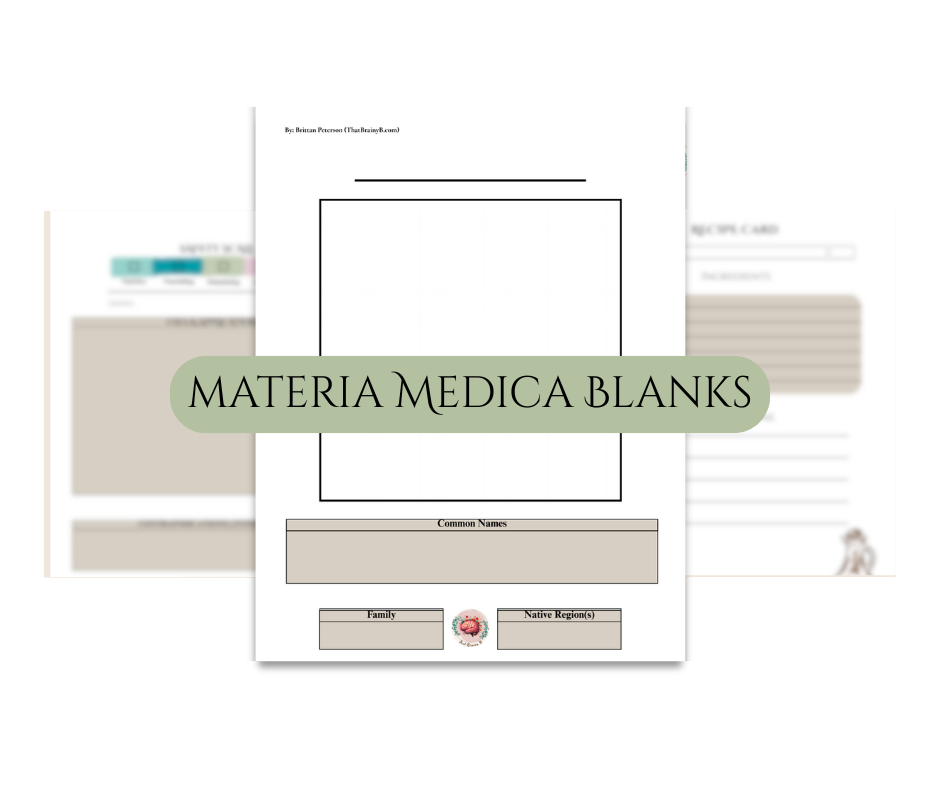
Welcome to your blank materia medica pages, thoughtfully designed to guide your herbal learning journey. Across eight pages you will find creative and detailed prompts that encourage deep exploration on each plant’s unique properties, uses, and energetic qualities.
Study the applications and uses from various angles in time and space (aka your kitchen and apothecary). Note the organ affinity and aromas you personally notice.
Use these pages as your personal resource to cultivate a rich understanding and connection with the plants you work with. Download and reuse forever!
So what is a tisane?
Now that we know more about tea, let’s discern between flavored tea and tisanes.
True Traditional Tea = An aromatic beverage made from the leaves of the Camellia Sinensis plant. The name is related to the trade routes and originally was associated with many different names. Te, Cha, and Chai are a just a few.
Tisane = An infusion made from flowers, roots, and leaves that are not from or blended with Camellia Sinensis. Often caffeine free however there are tisane blends that are naturally rich in caffeine similar to Camellia Sinensis. Yerba Mate and Cacao naturally contain caffeine. Guayusa made from Amazonian Holly leaves, and Yaupon from North American Holly Plant are said to contain more caffeine than coffee.
Scented & Flavored Teas = An blend of herbs and or spices that infuse flavor into leaves from the naturally caffeinated Camellia Sinensis. Jasmine is considered a flavored or scented tea because the leaves are covered with fresh flowers to soak up the floral flavor and smell. Moroccan Mint tea is also in this category since it often consists of Gunpowder Green Tea.
Starting your tea/Tisane Journey
(1) REFLECT: The first step like with many things, is to step back. Ask yourself, “where am I at right now (and do I want caffeine…)?” After you observe internally, start looking outwards.
- Do I feel warm or cold right now, dry or oily, etc. What would you like to get out of your tea or tisane?
If you are feeling heated, you might enjoy trying this tea as a cold infusion. Simply fill a jar with your herbs (1:5, or 1/4cup herb to 1 cup water). Let the jar sit overnight in your fridge for an extra cool and smooth blend, or on your counter for a bit more mild option. If you find you need a little extra warmth, why don’t you try adding a cinnamon stick!
If you are feeling a bit cold and tense, maybe holding on to more instead of speaking out; test a warm infusion. Are you feeling quite dry? Add a splash of cream to your tea and for the opposite, add a small bit of yarrow or ginger if you have some on hand and feel comfortable doing so!
(2) DECIDE: Figure out what you need in the moment. Personally, I find myself physically cold more often than not, and lean towards a warm infusion with some honey.
(3) INFUSE: Fill your vessel of choice with herbs and water and infuse for 5-10 minutes if doing a hot infusion, overnight for cold.
Hot Infusion 4g ~ 1tbsp/8oz water ~ as general guideline ~ Cold Infusion (1:5, or 1/4cup herb to 1 cup water)
(4) PERSONALIZE: After you have let it infuse, simply strain and enjoy. For best benefits, drink 3x throughout the day. Add in cinnamon or honey. Worried about too much dryness/tannin content, add some cream to help. I like using a tiny splash of vanilla creamer, it compliments the floral flavors of my LQ tea blend. well adding to the softness. If you find this blend too "gentle” for you, amp it up with woody herbs or volatile spices. Adjust daily to your seasonal rhythms and needs.
General Check-in’s
Tea can be very healthful, but there are still some general check-ins to consider.
Am I eating a well-balanced diet with variety?
Am I staying hydrated?
Am I promoting circulation with regular physical activity?
Should I limit my substance use? (How could I take steps to start)
How is my sleep?
What are my stress levels?
Other Recipes & Mentioned Resources
Herb Dosage Outlines: HerbalReality → [View Here]
Gyokuro vs. Tencha → [Read more]
22 types of green tea: [Learn More]
Green Tea & Matcha → [Read More]
Etymology of Tea → [View Here]
This post contains affiliate links. If you click through and make a purchase, I may earn a small commission at no extra cost to you. I only recommend products I truly support and use or just really enjoy. Thank you so much for supporting my small business!

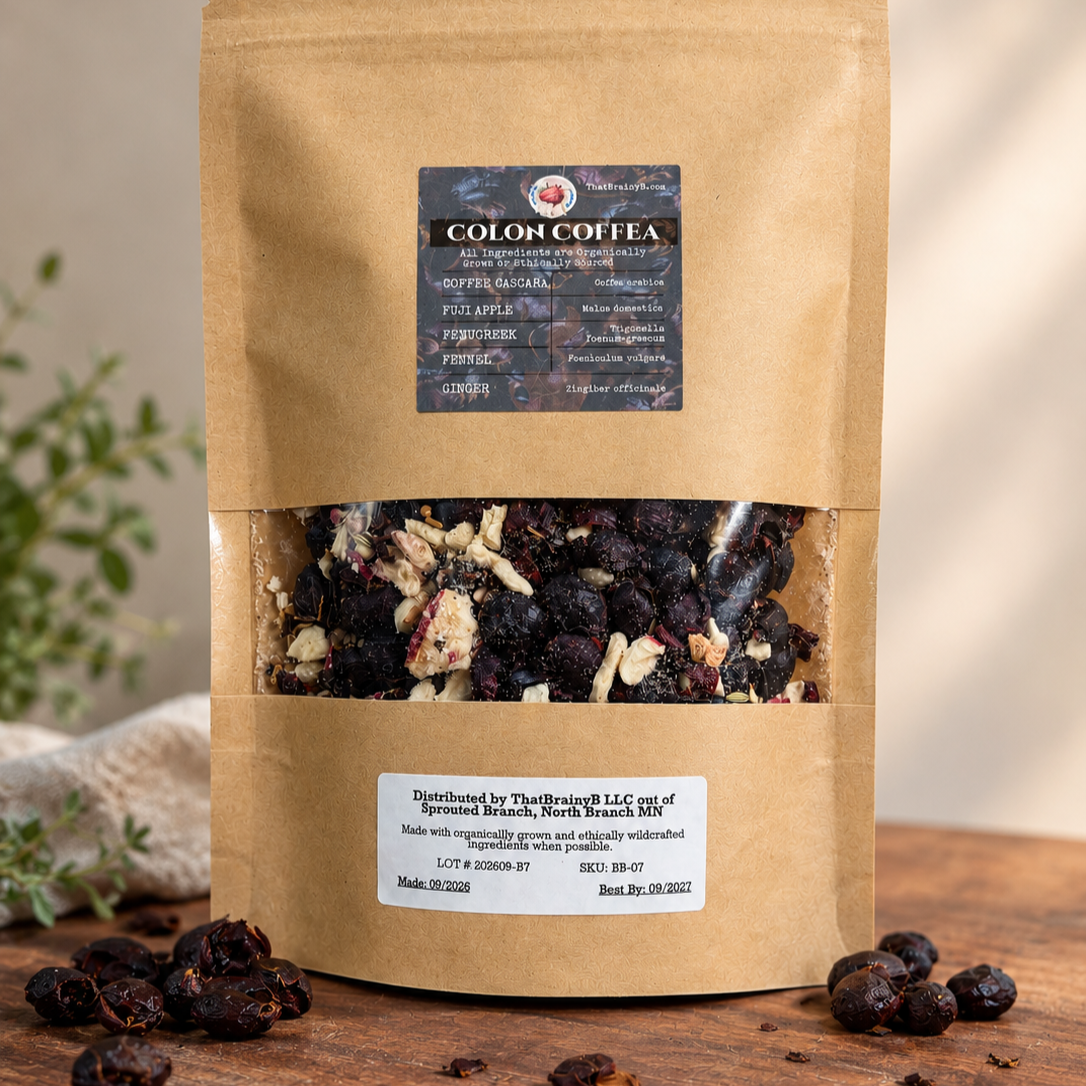
What happens when coffee cherry cascara meets apple, fennel, fenugreek and ginger? Meet Colon Coffea, a cozy seasonal tea created for the transition into fall. Learn about the plants in the blend, their traditional uses, the research behind them and how tea preparation can change the experience.