

A Taste of Autumn | Exploring Colon Coffea Through Flavor, Tradition & Herbal Energetics
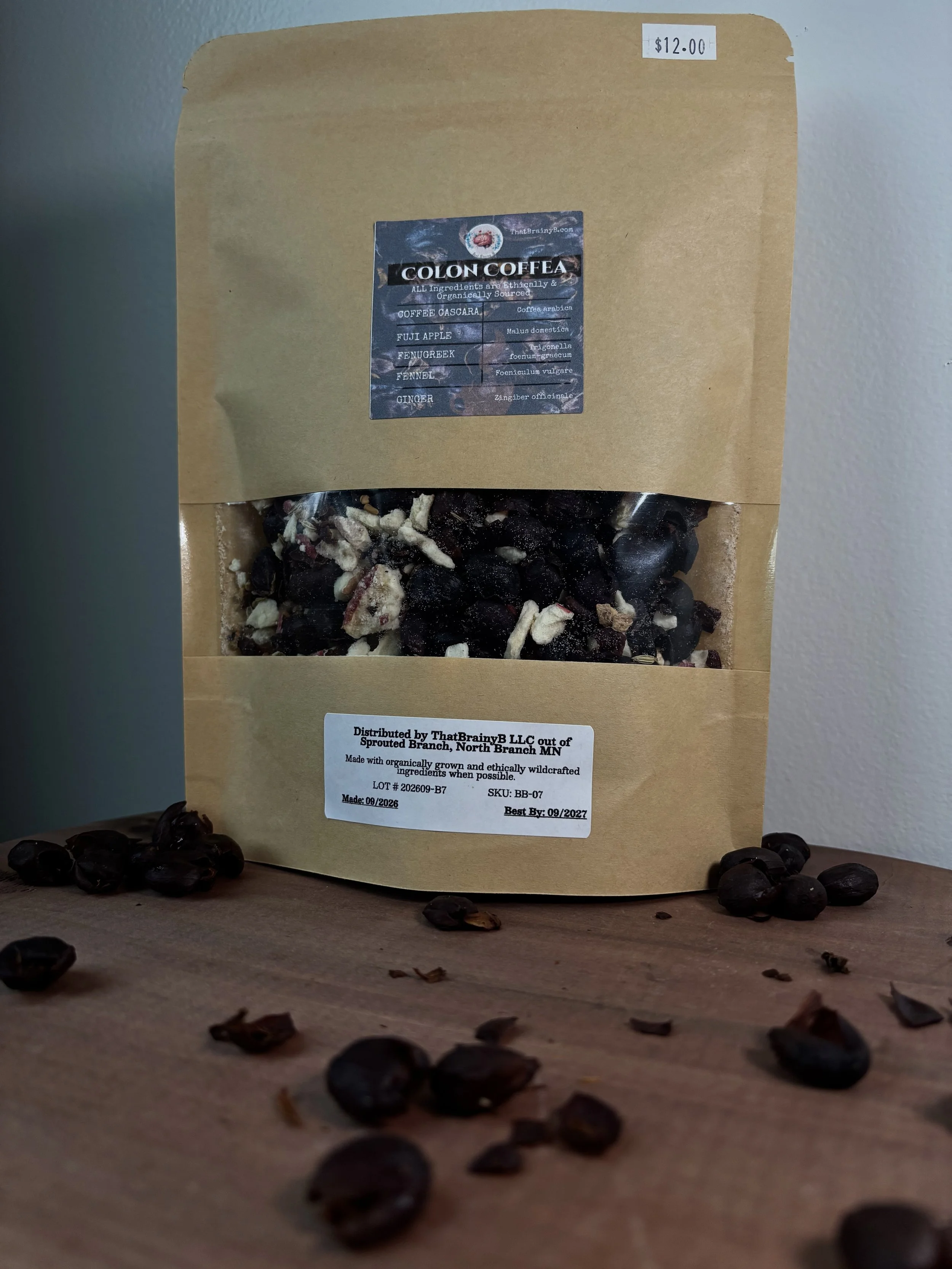
There is something special about a cup of tea made from ingredients you might not expect to find together. Coffee cherry cascara brings a lightly fruity, roasted character while apple adds sweetness, fennel brings its familiar aromatic quality, and ginger and fenugreek round out the blend with warmth and depth. Together, these ingredients create a cozy and naturally interesting tea with a story that goes well beyond the cup. In this post, we’ll take a closer look at the plants in my Colon Coffea blend, their traditional uses, their unique characteristics, and some of the research that helps us better understand them.
For educational use and learning. These formulations are shared for personal use. Do not reproduce or sell commercially.
Why this tea?
Colon Coffea was built around one very special ingredient, and one very beautiful season. In summer we crave fresh and cooling foods, but the season is shifting. Days will slowly get colder, and the leaves will part from the trees. Winter blues might start to tease, and you might be reminded how the joints feel tighter when it gets cold. Even our digestion can slow down, and we start to crave hearty warming meals. All of that is exactly what inspired this tea.
hink about water in its many forms. Liquid flows freely, while ice becomes tight and compact. Our bodies have their own ways of responding to cold too. Cold exposure can cause blood vessels near the skin to constrict and can trigger muscle activity like shivering as the body works to maintain its temperature. Research has also found that experimental cold stress can temporarily affect stomach emptying and gastrointestinal motility. [1, 2]
Have you ever walked into a cold area or freezer, and immediately your muscles tighten or even started twitching? There is something fascinating about watching the body respond to its environment.
And we have a lot of muscle to work with. Depending on how it is counted, the human body has roughly 600 muscles, and yes, the digestive tract contains muscle tissue too.
So I wanted to create a blend that felt appropriate for this seasonal transition: With warming ingredients like ginger to encourage movement and flow (to the innards) while coffee cherry cascara gives it a unique character that makes this tea unlike anything else in my herbal cupboard. Apple, fennel and fenugreek round out the formula with their own flavors, traditions and plant chemistry.
There is also an energetic side to this blend. I consider Colon Coffea to be warming, aromatic and somewhat drying, which is worth paying attention to if you already tend toward dryness. Things like dry skin, hair or nails can be useful observations when thinking about how a warming or drying formula might feel in your own body.
We’ll get into those energetics more later. First, let’s break down the ingredients and take a closer look at what each one brings to the blend.
** All recipes and ideas shared here are for educational and informational purposes. Every body is different, use what feels right for you and seek professional guidance when needed.

Meet the Ingredients
COFFEE CASCARA -> Base
Eventually I will share the background story of this blend, and how I was introduced to Cascara as an ingredient. Not to be confused with Cascara Sagrada - Rhamnus purshiana and has its own very different history and uses. Cascara is chemically interesting but research is still limited. One of the biggest reasons I wanted to use it in this blend, though, has less to do with its chemistry and more to do with sustainability…The unfortunate truth in the United States is that food is often wasted. It is estimated by the USDA that we waste around 30-40% of the total food supply every year. This is roughly 120 billion pounds or more. [Read more about Cascara]
FUGI APPLES -> Fall Familiar
Ever heard the phrase, “an apple a day keeps the doctor away?” Originally a Welsh folk proverb to promote healthy eating and accessible food. Apples contain helpful compounds that we will touch on in the research section. Their natural sweetness also helps soften some of the stronger flavors in this blend.
I also love using apple as a way to bring a little of that fall orchard feeling into a cup of tea. Who doesn’t love picking apples this time of year?
FENUGREEK-> Corollary
Honestly before this blend, I had never even worked with fenugreek in a tea. As I was formulating it kept circling my head, so I grabbed the jar and gave it a good whiff and closed my eyes. My stomach ever so slightly got warmer, and I fell in love with the aromatics. Fenugreek has a long history of culinary and traditional use, and it brings a distinctive earthy, maple-like aroma to this blend. In The Women’s Apothecary, it is also discussed in the context of overindulgence, which immediately made me think of Thanksgiving tables piled high with everyone's favorite foods.
Sometimes an ingredient makes it into a formula because the research says something interesting. Sometimes it makes it in because your senses tell you it belongs there. Fenugreek was a little bit of both for me.
FENNEL -> Familiar
Fennel is probably one of the most familiar digestive herbs in this blend. The aromatic fruits have a long history of use in traditional herbalism and food, particularly around digestion and occasional gas or bloating, or a tight gripped abdomen. Its sweet, aromatic flavor also makes it a natural companion to stronger ingredients like ginger and fenugreek.
Fennel can also be helpful in cases of overindulgence, but of course it is best to avoid that and eat smaller amounts more frequently!
GINGER-> Spicy
Another popular herb for digestive troubles, specifically nausea. From an herbal perspective, ginger is warming and stimulating. Its pungency makes it a natural fit for a blend designed around the transition into colder weather. It also has a long history of use as a warming diaphoretic and in preparations for respiratory complaints. Additionally it could support a dry unproductive cough according to Herbal Medic by Sam Coffman. With fall we can see a surge in illness such as Norovirus, Influenza, Severe Sinusitus/Allergies, and more. Fall also brings plenty of situations where nausea or digestive irritation can show up, whether from an illness, changes in routine, travel, or simply eating a little differently as the seasons change.
Colon Coffea was not specifically formulated as a seasonal illness tea, and I don't want to make it sound like it was. But ginger's traditional uses and research make it an good pal to have along for the ride.
The Energetics of the Blend & Flavor
When I go to blend a tea, I am going to focus on three things:
1.) The Season
2.) Flavor and Familiarity
3.) Seasonal Symptoms and Goal
I already introduced the season, and symptoms that can go with it like tummy troubles. This blend is meant to support the digestive system through various ailments such as gas and bloating for an example. The flavor is what I would describe as a wafer like treat or waffle cone, with hints of caramel and fruity essence. Originally I crafted this blend without ginger, but it needed a little extra spice and warmth.
The funny story is that I had this blend all formulated even before my Summer Honey blend. A close family friend introduced me to cascara, which she grew and harvested herself here in Minnesota. Being from Peru originally, she has a unique perspective of coffee. When she had me try the Cascara, I was blown away by the taste and immediately wondered why the heck we don’t drink it here. The earthy sweetness with a touch of fruity flavor exploded in my mouth, and the ideas were racing. Cascara does contain caffeine, although generally much less than a typical cup of brewed coffee. One commonly cited estimate puts cascara tea at around 25 mg of caffeine per cup compared with roughly 80 mg in brewed coffee, although the actual amount can vary depending on the cascara and how it is prepared. [1]
So it started with Cascara, and built around that based on flavors and experience. I even had customers taste an infusion of just Cascara and note their reflections. Several noted that there was a fruitiness similar to apple while others reflected on the spice and aromatics. Others noticed the spice and aromatics.
And then there were the faces…
You know the ones. The first sip. A pause. Eyes lighting up because they weren't expecting that flavor at all.
Those reactions helped shape the final blend just as much as anything I read in a book.
Energetically this tea favors warmth and stimulation with the overall degree of dryness varying from person to person. The aromatic herbs make the blend feel diffusive, while the warming ingredients give it a quality that feels particularly appropriate as we move into colder weather. I also consider the formula relatively nourishing and grounding compared with a simple stimulant tea, which is part of why I wanted ingredients like apple and fenugreek alongside the more warming and aromatic herbs.
These energetic descriptions are part of the traditional herbal framework I use when formulating. They aren't measurements of temperature or dryness in the biomedical sense, and they don't replace what we know from modern research.
So let's take a closer look at what the research actually has to say.It is nourishing and diffusive in nature. Some may say it is restorative or building based on Cascara compounds and research.
Welcome!
Hey, I’m Brit. I help you blend the comfort of the kitchen with the care of the apothecary.



Tea Preparation Matters
Recently I did a fun little game style video showing the many options behind making tea. There isn’t really a right or wrong way, but it has a big effect on the components and medicinal quality. Temperature, Timing, Pour, strain, all can vary based on culture and tradition.
This blend is primarily made up of roots, peels, and seeds, all which are tougher and using a longer, hotter preparation can help extract more of the water-soluble compounds and flavors from these materials.
For a local event, I did made apple cider using my tea for flavoring and allowed it to simmer for 10-15 minutes which resulted is a delightful aromatic beverage! It may get bitter with a longer steep so taste throughout the process and find your flavor!
What the Research Actually Tells Us
This is where things get especially interesting.
I love traditional herbalism, sensory experience and the stories that plants carry with them. But I also want to know what modern research has actually found. And sometimes the answer is exciting. Sometimes it is complicated. Sometimes the most honest answer is simply, we don't know yet.
So let's take a look at the research behind the ingredients in Colon Coffea.
Coffee Cascara
Cascara is probably the ingredient that makes this blend the most unusual.
Researchers have identified a variety of phytochemicals and polysaccharides in coffee cascara, including phenolic compounds and pectic polysaccharides. One study examining 20 different cascara samples found that their chemical composition varied depending on factors such as coffee cultivar and country of origin. Processing methods may also influence what compounds are present. [1]
Other research has found differences in phenolic compounds and laboratory antioxidant activity between cascara samples from different geographic regions. That makes sense when we remember that cascara isn't one chemically identical ingredient. The coffee variety, growing environment and processing method can all contribute to what ends up in the finished material.
There is also the caffeine question.
Cascara does contain caffeine, although generally much less than brewed coffee. The exact amount can vary substantially depending on the material and preparation. This is one reason I don't want to give you a single number and pretend it applies to every cup.
The research on cascara is still relatively young. We have interesting chemistry, laboratory studies and some early human research, but we do not have enough human evidence to say that drinking cascara tea produces all of the benefits that have been observed in laboratory studies.
And honestly, that is part of what makes cascara so fun to study. [More on Cascara]
Apple
Apples might seem like the familiar ingredient here, but there is quite a bit going on beneath that familiar flavor.
Apples contain a variety of bioactive compounds, including hydroxycinnamic acids, flavan-3-ols, dihydrochalcones, chlorogenic acid, epicatechin and phloridzin. A recent review looked at clinical research involving apples and their derivatives in relation to metabolic health, inflammation and oxidative stress. The authors also discussed ways apple by-products such as pomace can be used as food ingredients. [2]
That doesn't mean a cup of apple-containing tea should be treated like eating a whole apple. The preparation is different, the amount of apple is different and we don't necessarily extract or consume all of the same compounds.
For me, the most interesting part is that apple contributes more than sweetness. It brings its own plant chemistry to the blend while helping soften the stronger flavors of ginger, fennel and fenugreek.
Fennel
Fennel has one of the longest histories of traditional digestive use among the plants in this formula.
It has traditionally been used around meals and for complaints involving gas, fullness and digestive discomfort. There is also some clinical research involving fennel-containing preparations and gastrointestinal symptoms, although we need to be careful about applying those findings directly to a simple cup of fennel tea.
This is a recurring theme throughout herbal research: the plant, the preparation and the dose matter.
A study of a multi-herbal preparation containing fennel and other digestive herbs found improvements in symptoms of functional dyspepsia compared with placebo. But because the preparation contained multiple ingredients, we cannot use that study to say that fennel alone caused the effect. [3]
That distinction might sound picky, but it is actually one of my favorite parts of reading research. We want to know what a study really tells us rather than giving one plant credit for an entire formula.
Fenugreek
Fenugreek is where the research gets particularly interesting, but also where I want to pump the brakes a little.
Fenugreek seeds contain fiber and a variety of phytochemicals, including saponins and polyphenols. Human studies have investigated fenugreek in areas including blood glucose, appetite and metabolic health. For example, small controlled studies have found that adding fenugreek seed powder to foods can change post-meal glucose responses. [4]
However, these studies often use specific amounts of fenugreek seed or concentrated extracts, not the relatively small amount that would be found in a cup of my tea.
There is also a broader review of ingredients used for upper gastrointestinal conditions that found the evidence for fenugreek to be limited compared with some other botanicals. [5]
So while I find fenugreek fascinating and love what it contributes to this blend, I don't want to turn those studies into claims that Colon Coffea can regulate blood sugar or treat digestive disease.
That isn't what this tea was designed to do.
Ginger
And then we get to ginger.
Ginger has probably been studied more extensively for digestive symptoms than any other ingredient in this blend. One of the areas with the most human research is nausea and vomiting.
A 2024 overview examined 15 systematic reviews and meta-analyses of ginger for nausea and vomiting. The authors found evidence supporting ginger's usefulness in several settings, including chemotherapy-related and postoperative nausea, although they also noted that the methodological quality of the underlying reviews ranged from critically low to low. [6]
That last part is important.
It is tempting to see a pile of studies and assume that means the evidence is automatically strong. But the quality and design of those studies matter just as much as the number of them.
Other systematic reviews have found promising results for ginger and digestive function, while also noting heterogeneity between studies and the need for better-designed research. [7]
So ginger gives us one of the stronger research stories in this particular blend, especially around nausea. But again, we're talking about ginger research, not a clinical trial of Colon Coffea.
So What Does This Mean for the Tea?
This is where I think herbalism gets really interesting.
Every ingredient in this blend has its own history, chemistry and body of research behind it. Some have more evidence than others. Some have fascinating laboratory findings but very little human research. Others have centuries of traditional use alongside a growing body of modern research.
But Colon Coffea itself has not been clinically studied.
We cannot simply add together studies on cascara, apple, fennel, fenugreek and ginger and assume that the finished tea will produce all of the effects observed in those studies. The amount of each ingredient matters. The form matters. The preparation matters. The compounds that actually make it into the cup matter. And the way those ingredients interact with one another may matter too.
What I can say is that these plants have interesting histories and chemistry, and several of them have research that gives us good reasons to keep asking questions. For me, that is enough. I don't need every tea to have a giant list of promises attached to it. Sometimes it is enough to create a thoughtful formula, understand the plants as well as I can, enjoy the flavor and stay curious about what we still have to learn.
FAQ
What is Colon Coffea?
Colon Coffea is a seasonal herbal tea blend built around coffee cherry cascara, apple, fennel, fenugreek and ginger.The blend was created to be warming, aromatic and flavorful as we move into the cooler months. It combines the unusual fruity character of cascara with familiar culinary herbs and spices.
What is cascara?
Cascara is the dried fruit material surrounding the coffee bean. The word cascara means “peel” in Spanish. Coffee cherry cascara is not the same thing as Cascara Sagrada, which comes from Rhamnus purshiana, a completely different plant. Cascara contains naturally occurring caffeine, although generally much less than a typical cup of brewed coffee. The amount can vary depending on the cascara and how it is prepared.
What does Colon Coffea taste like?
I describe it as a wafer cookie or waffle cone with hints of caramel and fruity sweetness.The cascara gives the tea an earthy, lightly fruity character. Apple adds familiar sweetness, while fennel and fenugreek bring aromatic depth. Ginger was added at the end of the formulation to give the blend a little extra spice and warmth.
Why is it called Colon Coffea?
The name is a playful reference to the digestive focus of the formula and its coffee-related star ingredient, Coffea. Despite the name, this is not a colon cleanse or laxative tea.
Does Colon Coffea contain caffeine?
Yes. Because cascara comes from the coffee fruit, it naturally contains caffeine. The amount can vary considerably depending on the cascara itself and how the tea is prepared. One commonly cited estimate puts cascara tea at around 25 mg of caffeine per cup, compared with roughly 80 mg in a typical cup of brewed coffee. This is only an estimate and should not be treated as a fixed caffeine content for every preparation. If you are sensitive to caffeine, keep this in mind when deciding when and how much to drink.
Is Colon Coffea a coffee?
No! Cascara comes from the coffee plant, but it is the dried fruit surrounding the coffee seed rather than the roasted coffee bean. The flavor is also quite different from brewed coffee. Cascara tends to have a lighter, fruity and slightly earthy character.
What is Colon Coffea traditionally used for?
The ingredients in this blend have different histories of traditional use. Fennel, ginger and fenugreek have all been used traditionally around digestion, while cascara has its own history as a coffee fruit beverage in several cultures. However, Colon Coffea itself has not been clinically studied, so traditional uses of individual ingredients should not be interpreted as proof that this particular tea treats a health condition.
Can Colon Coffea help with digestion?
Several ingredients in the blend have traditional digestive uses, and ginger and fennel in particular have been studied in relation to gastrointestinal symptoms. That said, research on an individual herb or concentrated preparation does not automatically tell us what a cup of Colon Coffea will do. Think of this as a thoughtfully formulated digestive tea, not a treatment for digestive disease.
Is Colon Coffea a laxative or colon cleanse?
No. The name is not meant to imply that this is a laxative or “detox” tea. It does not contain Cascara Sagrada or another ingredient intentionally included as a stimulant laxative. Some people may notice increased bowel activity after drinking a warm beverage or a preparation containing aromatic digestive herbs. Individual responses can vary.
How should I prepare Colon Coffea?
Because this blend contains tougher plant materials such as seeds, roots and dried fruit material, I recommend giving it a longer infusion than you might use for delicate flowers or leaves. Follow the preparation instructions included with your tea and adjust the steeping time to your preferred strength. Preparation can affect flavor and the amount of different compounds extracted into the finished beverage.
Can I drink Colon Coffea every day?
This blend was created as a seasonal tea and can be enjoyed as part of your normal beverage routine. However, there is not enough research on the finished Colon Coffea formulation to establish a specific therapeutic daily dose. Remember that it contains caffeine from cascara, so consider your total caffeine intake if you are drinking it regularly.
Can I drink Colon Coffea before bed?
Because cascara naturally contains caffeine, this may not be the best evening tea for people who are sensitive to caffeine. If you know caffeine affects your sleep, try enjoying Colon Coffea earlier in the day.
Can I drink Colon Coffea during pregnancy or breastfeeding?
There isn't enough research specifically on this finished tea to establish its safety during pregnancy or breastfeeding. Cascara also naturally contains caffeine, so anyone who is pregnant or breastfeeding should consider the tea as part of their total caffeine intake and discuss its use with their healthcare professional.
Who should be cautious with Colon Coffea?
Consider talking with a healthcare professional before using this tea if you:
Are pregnant or breastfeeding
Are particularly sensitive to caffeine
Have a known allergy to any of the ingredients
Take medications that may interact with herbal products
Have a diagnosed gastrointestinal condition
Have been advised to restrict caffeine or particular herbs
Why does the tea taste different depending on how I prepare it?
Because preparation matters! Water temperature, steeping time, the amount of tea used and how the tea is strained can all influence what gets extracted into your cup. A longer or stronger infusion can produce a different flavor and concentration than a short, lighter infusion. This is one reason I like to think of making tea as part of the herbal process rather than simply pouring hot water over a plant.
Can I use Colon Coffea in recipes?
Absolutely. You don't have to drink every herbal preparation from a mug. Try experimenting with a concentrated infusion in baking or cooking, or pair the finished tea with foods that complement its warm, fruity and aromatic flavor.
Is Colon Coffea intended to treat a medical condition?
No. Colon Coffea is a food and herbal education product, not a medication or treatment.The information shared in this article is intended for educational purposes and discusses traditional herbal use and current research. Research on individual ingredients does not establish that the finished tea can diagnose, treat, cure or prevent disease.
Why study the ingredients if the finished tea hasn't been studied?
Because that's where herbal education gets interesting! We can learn about the history, chemistry, traditional uses and research surrounding individual plants. That information can help us make thoughtful formulation decisions. But we also have to recognize the limits of that evidence.
Ready to taste it?
Colon Coffea Fall Tea is available as part of my limited Fall collection while this seasonal batch lasts. [View Shop - COMING SOON LOVES]
Other Recipes & Resources
Coffee Cascara Safety & Composition → [Read on PubMed]
Cascara Phytochemicals & Polysaccharides → [Read on PubMed]
Coffee Processing By-Products & Food Waste → [Read on PubMed]
Apple Phytochemicals & Health Research → [Read on PubMed]
Fennel & Functional Dyspepsia → [Read on PubMed]
Fenugreek & Blood Sugar Research → [Read on PubMed]
Ginger & Digestive Health → [Read on PubMed]
Ginger & Nausea Research → [Read on PubMed]
What Is Cascara? → [Read More]
Caffeine During Pregnancy → [Read More]
Breastfeeding & Caffeine → [Read More]
The Woman’s Herbal Apothecary → [Linked]
Herbal Medic by Sam Coffman → [Linked]
All About Tea & Traditions → [Read More]
All About Cascara → [Read Here]
This post contains affiliate links. If you click through and make a purchase, I may earn a small commission at no extra cost to you. I only recommend products I truly support and use or just really enjoy. Thank you so much for supporting my small business!

A fun sensory guide to help you slow down and explore flavor more deeply.
This printable flavor exploration journal is designed to support your tasting experience; whether you’re working with herbal mocktails, teas, or simple ingredients at home.
Inside, you’ll find:
Guided prompts for observing color, scent, and first impressions
Space to reflect on taste, texture, and balance
Creative ideas for pairing flavors and ingredients
A simple structure to help you stay curious while tasting
After time, you’ll really begin to notice how flavor moves through the senses: color, aroma, texture, and taste.
It’s about learning how you truly experience flavor.